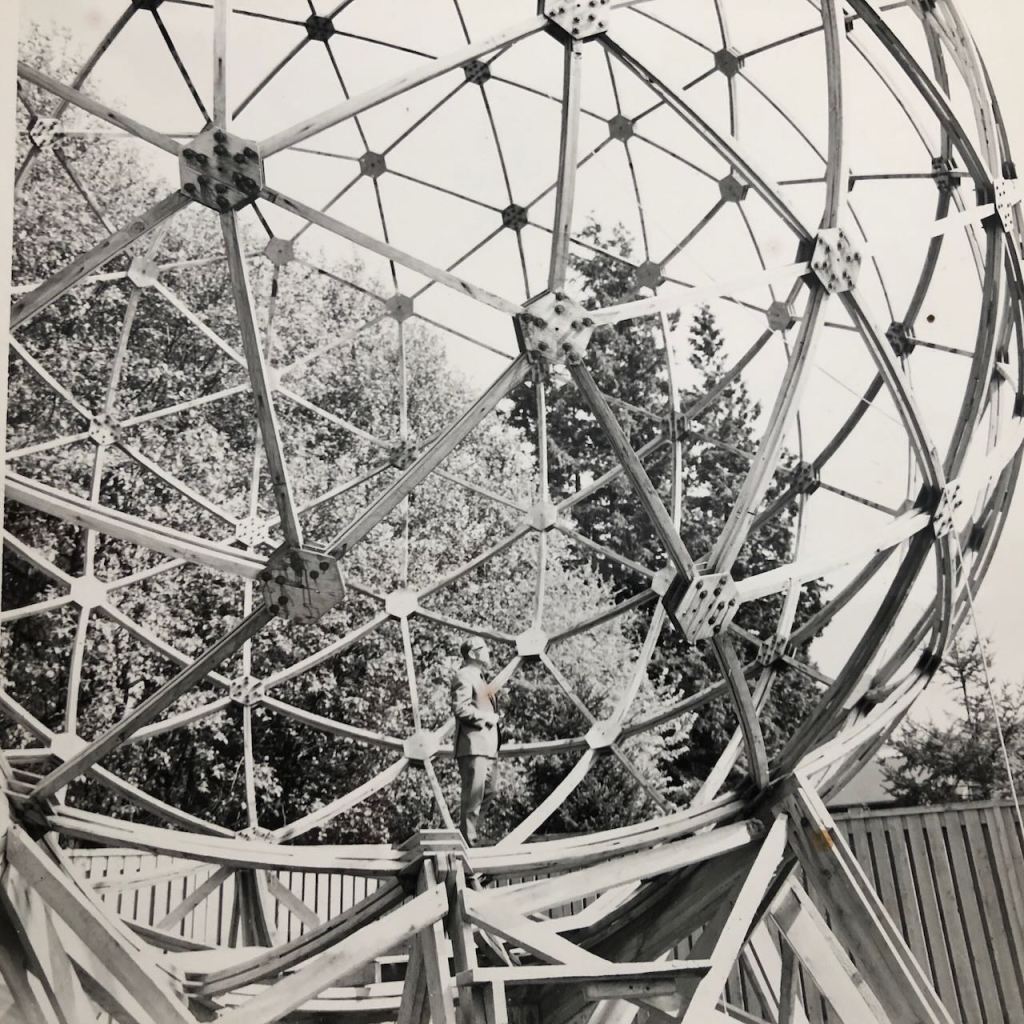
As a practicing builder and architect since at least 1995, I have long been preoccupied with the work of R. Buckminster Fuller. Not just because I think geodesic structures are cool, even if famously leaky*. I first encountered domes in 1988 as a high-school student, wandering among the ruins of an abandoned hippy encampment in the Vermont woods. I spent many hours in these handmade domes, replete with stained glass windows, tattered Persian rugs, macrame glass planters, and a deeply sorrowful impression of a happy life that might have been. This led me to the Dome and Shelter books (Lloyd Kahn), and eventually Bucky and Synergetics which I read cover to cover. I was struck then by this displaced nostalgia, what would the 1970’s might have been, had we not taken a darker turn, and I’ve been quasi-obsessed with the Design Science Revolution Bucky claimed was necessary for humanity to track from Oblivion to Utopia.
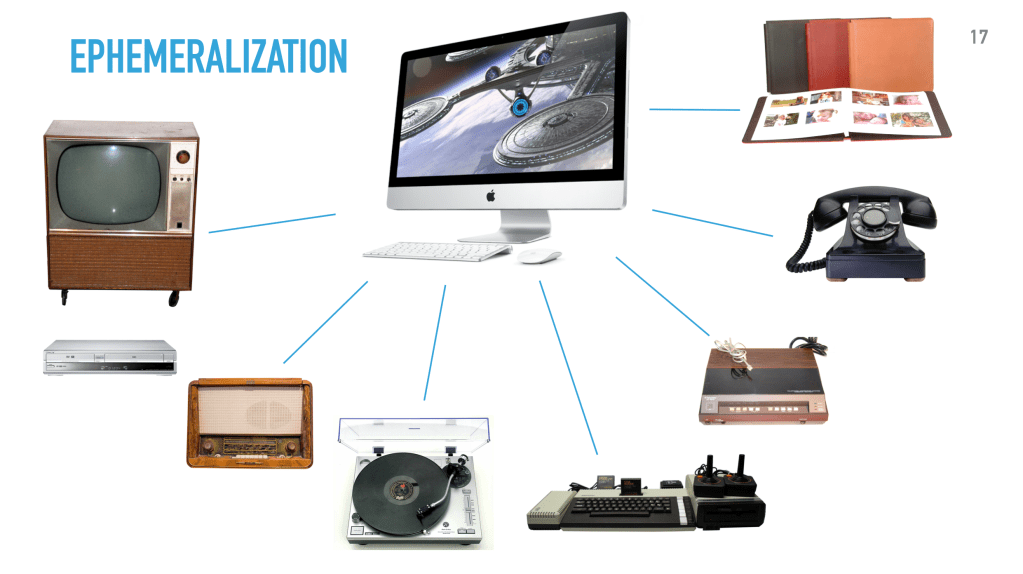
Fuller’s claim was that ephemeralization, or dematerialization through better engineering, mathematics and geometry, could result in improvements in resource efficiency to such an extent, that we could collectively provide a more universal standard of living to the global populace. Some economists claim we are on that track now, but Jevon’s Paradox seems to force any march of progress into reverse. We seem to have fallen into what Ron Wright calls a Progress Trap. I have tested ephemeralization in my own practice over 30 years now (notably through the concept of Factor10 design principles), and it has born only partly true in my small sphere of influence.
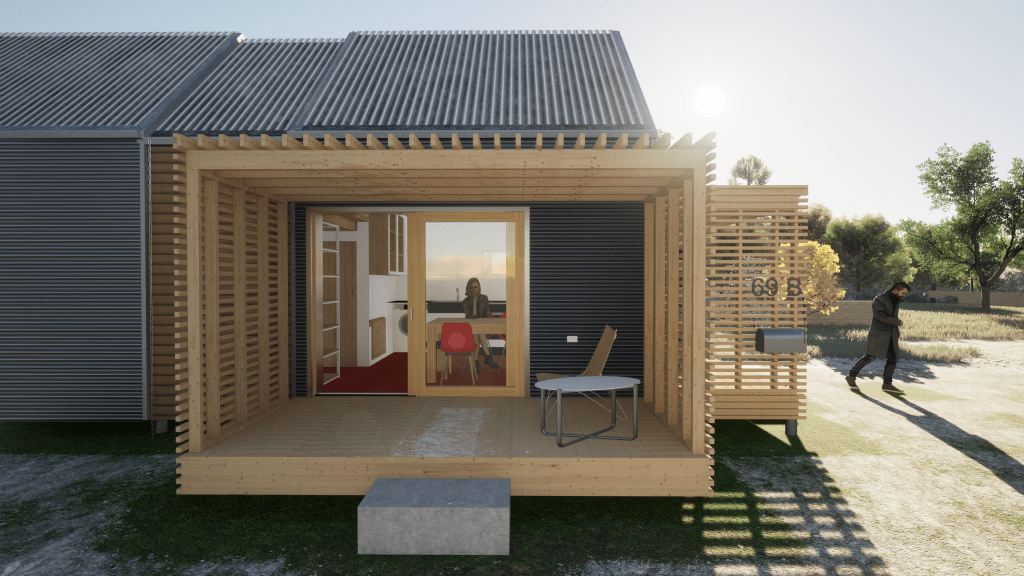
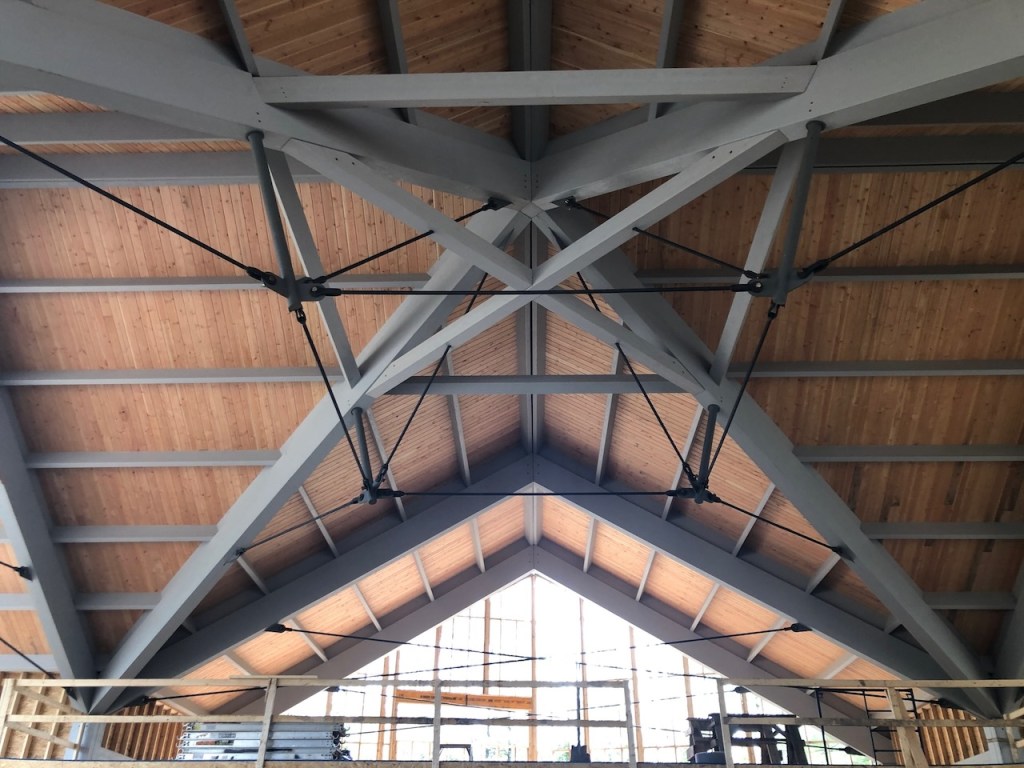
This push for ephemeralization is regularly met with a friction or resistance that I can only call the habits of convention: Traditional notions of what a house or any building should look like ~ and believe me, there is significant inertia behind this, where even my most *out there* clients just don’t want to go. This constrains architecture to a kind of derivative historicism, an aping of prevailing styles, or in the worst cases extravagant formal expressions that are too often structurally inelegant thermal sieves. The opportunity to exercise any knowledge of the principles of Design Science, as Fuller intended it, is limited to a handful of structural gestures and on occasion a reduction in size or bulk reduction of material through what is sometimes called ‘value engineering’ (which is often joked is adds no value and is decidedly not engineering). The latter is almost never a radical embrace of true economy.
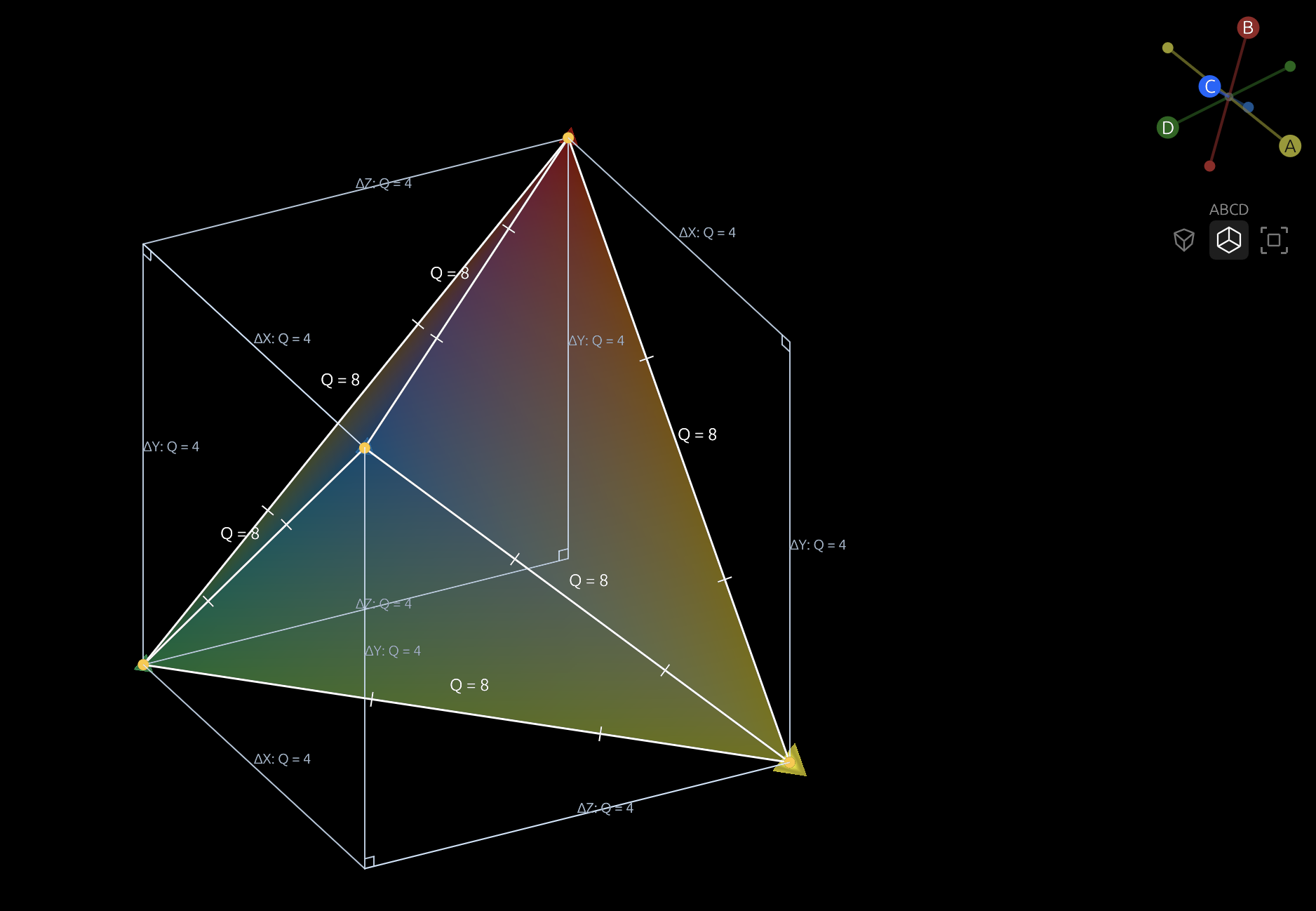
The rigid tools available to designers, rooted in Cartesian geometry do not help at all. These tools are at their very foundation a XYZ or cube-based labelling of space through (0,0,0) coordinate geometry addresses, which is inherently irrational for nearly every polyhedron except the cube. It’s not that truly economical design is not possible in XYZ, it’s just that the rationality of the geometry itself is never a guide for it. When architecture aligns with geometry that is fully rational, elegance and economy fall out as a consequence.

This rootedness of XYZ and ‘Everywhere Boxes upon Boxes‘ is so deeply prevalent in most of math, physics and basically all of science, that an alternative is scarcely conceivable to any serious practitioner. Decimal mantissa, infinite extension and therefore the necessary decimal truncation to compute anything in finite time results in a litany of accumulated and float errors that are accepted as just ‘the cost of doing business‘ in XYZ. This cultural bias is akin to the fish in water metaphor; “what do you think of all of this water?” The response, “What do you mean, water?” If you have never known anything else, no less practiced any other method, it is difficult to escape the pull of this gravity, intellectually and physically. We even use the term ‘three dimensions’ as if physical space is defined by three orthogonal axes. Why not four Isogonal axes? (tetrahedral coordinates). The pursuit of rationality is waved away by mathematicians as an aesthetic pursuit by those uncomfortable with infinity, or some quaint cult of Pythagorus so many aeons ago. That may be so, but the pursuit results in cleaner math, with calculations that complete in finite time, to – in many cases – arithmetic infinite precision, often with no accumulated error. It may take decades for this to be understood by all, decades we may not have left.
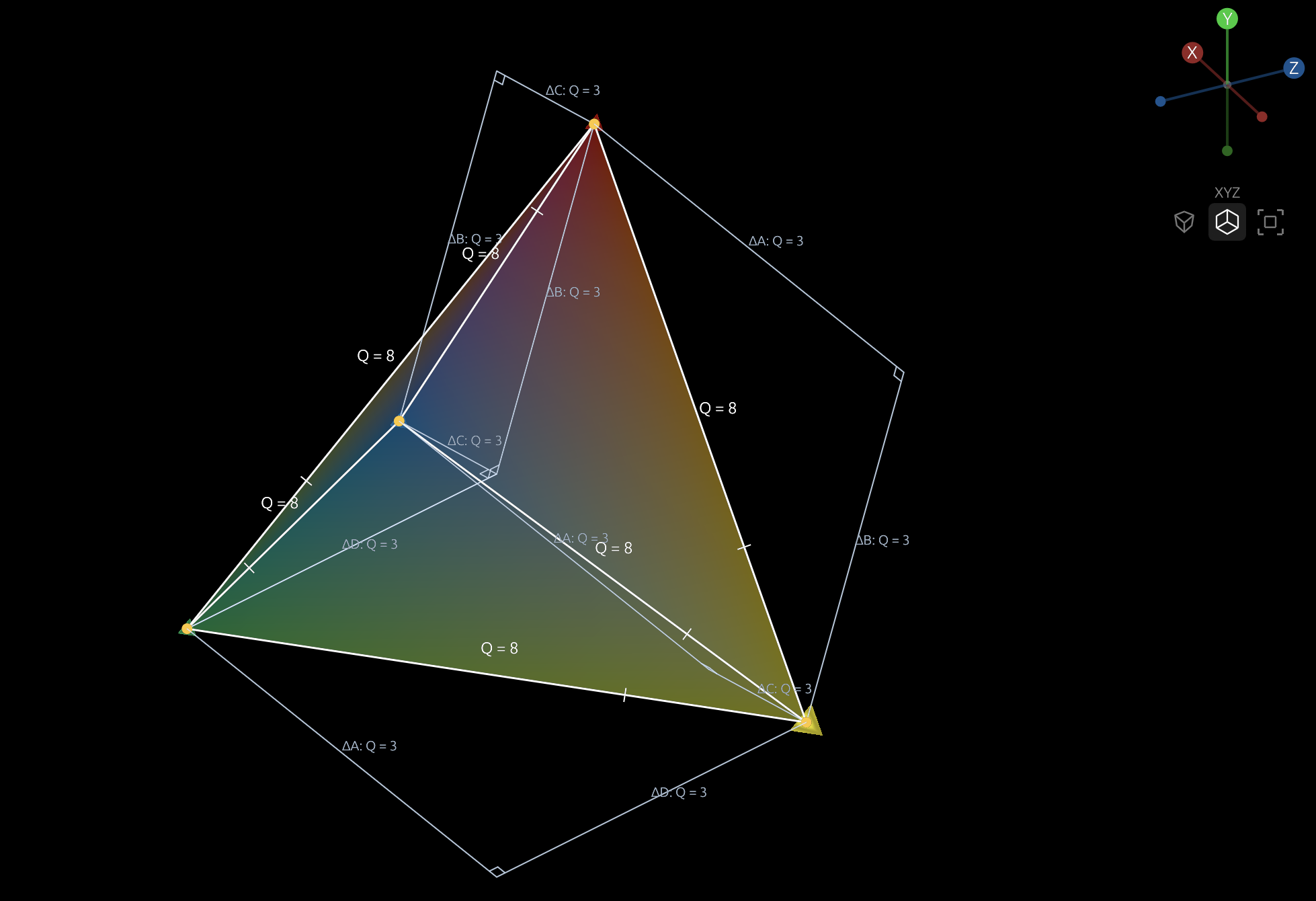
By the time you add the signed directions of XYZ±: you actually have six vectors to define all 8-Octants of the space (not three!), which maps better to an Octahedron that the cube. The Tetrahedron actually spans all space with just 4-vectors addressed as [0,0,0,0], the minimum system of Universe, per Bucky, with an inside and an outside. This ‘Cartesian Disease‘ has created a false (Newtonian) intuition about space itself, one where its infinite extension of a cubic lattice is understood as some kind of absolute truth. Formerly the ancients considered the infinite the antithesis of time, not its extension. Conflating time and space as Minkowski timespace has only compounded the problem. Einstein was the first to dismantle this notion, by proving that space is not uniform, that it is shaped by gravity or even vice-versa, and he developed the metric tensor to define vectors in this curved space, (which we use in the ABCD.EARTH software). The shift to ABCD thinking pushes us from considering Universe as an infinite abstraction, back towards an unfathomably massive, but finite, self-regenerative, energetic/informational system. Physics is after all, revealed by geometry, but which geometry?
Working to counter XYZ habits with AI agents, whose foundational mathematical and geometric training is nearly 100% based on classical trig (Sin/Cost/Tan/Angle/Distance) and XYZ (Pi, √3 cube diagonals, √2 face diagonals) has required educating agents on the atypical methods of Synergetics, from Skills to Memory to ‘Pre-commit-hooks‘ that flag deviations and route agents back to the core mission of ‘RT Purity‘ as we have called it.
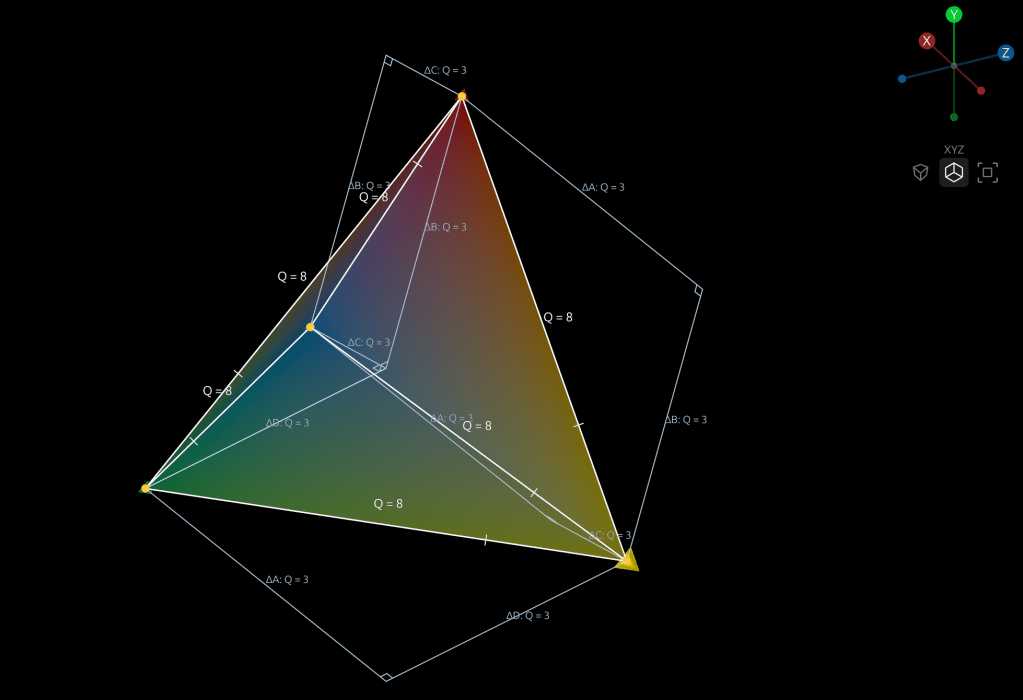
For a speculative reach into the physics of Synergetics: https://www.researchgate.net/publication/400054293_Extending_the_Janus_Point_from_Temporal_to_Spatial_Geometry_via_Tetrahedral_Quadray_Coordinates
Fuller demanded a wholesale change in thinking, which he rigorously applied to himself and his own use of language. The problem is, the rest of us have been thinking for thousands of years in the same geometric terms and ideas since Euclid (300 BCE) and even before. While there is evidence of a more rational foundation of trigonometry dating back to Babylonian times (the Plimpton 322 tablet is evidence of this, from 1762 BCE), these methods have been lost to the sands of time, until resurrected by Canadian/Australian mathematician NJ Wildberger, professor at the UNSW, Australia. Fuller’s magnum Opus, Synergetics 1 & 2, has never reached mainstream academia, with notable exceptions (ie. https://wyss.harvard.edu/team/executive-team/), not for lack of novelty or rigour, but arguably because of the impenetrable prose Fuller used to formalize his research. In private correspondence with theoretical physicist and lecturer at Oxford, Julian Barbour emphasized that:
“I do find things like the Platonic solids very interesting. This is because I’m getting more and more convinced that science should be about shapes rather than dynamics. In fact one can see from early Greek thinking, starting with the myths associated with the constellations, and then the ideas of Plato and the atomists, who according to Lucretious were trying to explain the shapes of microscopic object and creatures of different genera, that very naturally they were trying to understand the origin of shapes. I think it is just possible that the development of dynamics, which happened at about the same time as Lucretious wrote his book when Hipparchus developed the first dynamical theory, his theory of the motion of the Sun around the ecliptic with the rotation of the Earth defining time, may have marked a wrong turn. I’m currently writing a book which will include discussion of that.”
Julian Barbour: 2026.02.22 in email correspondence
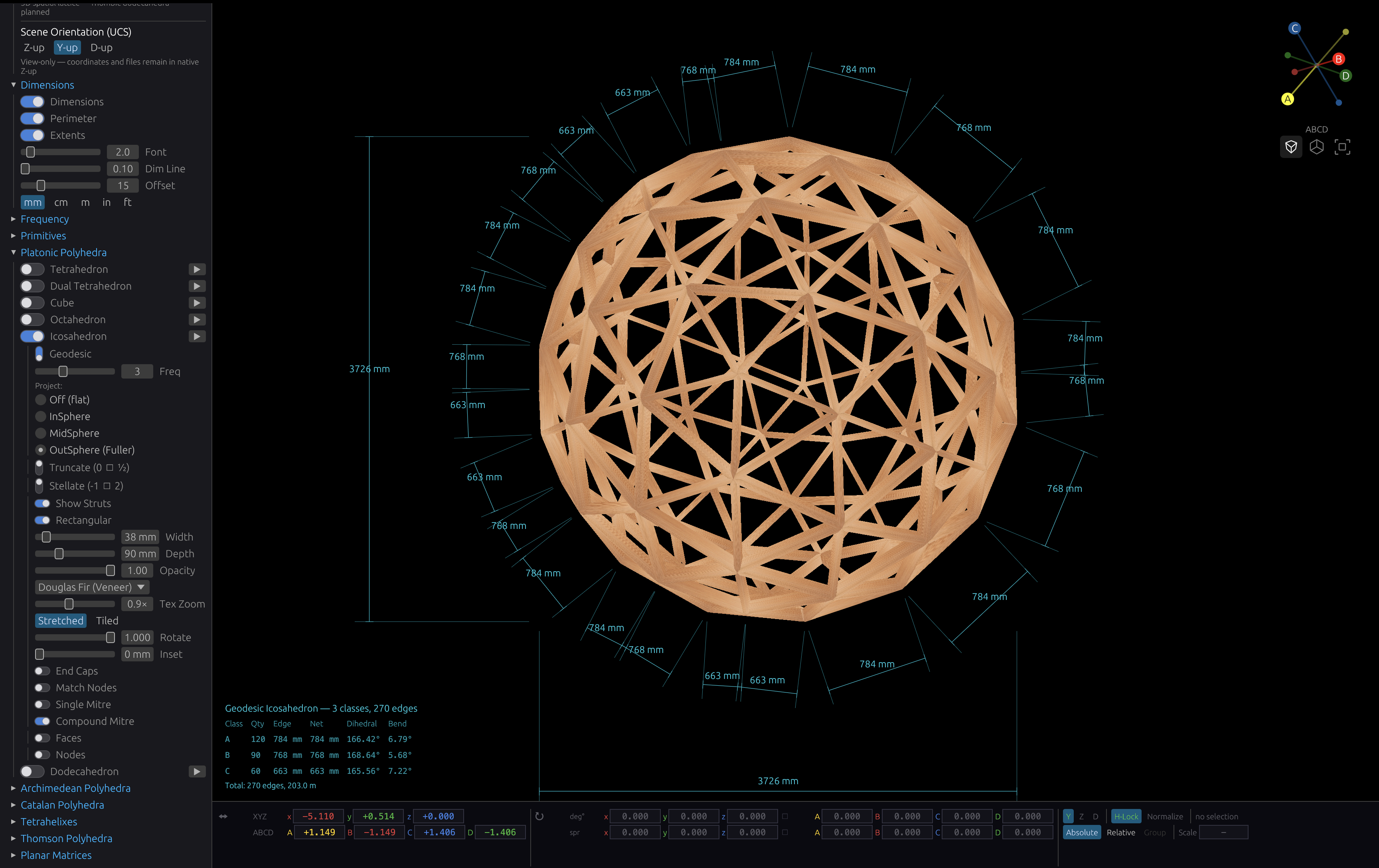
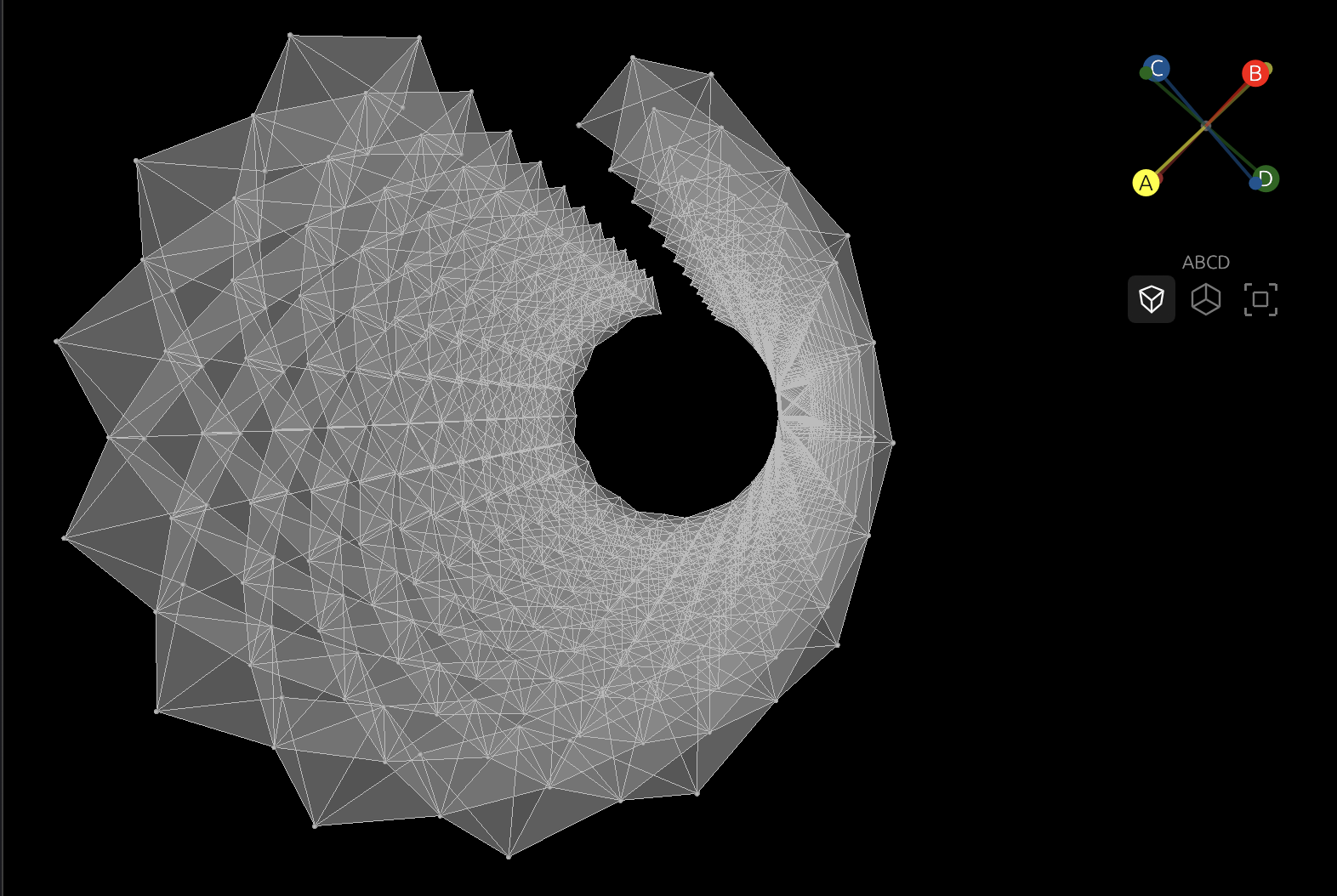
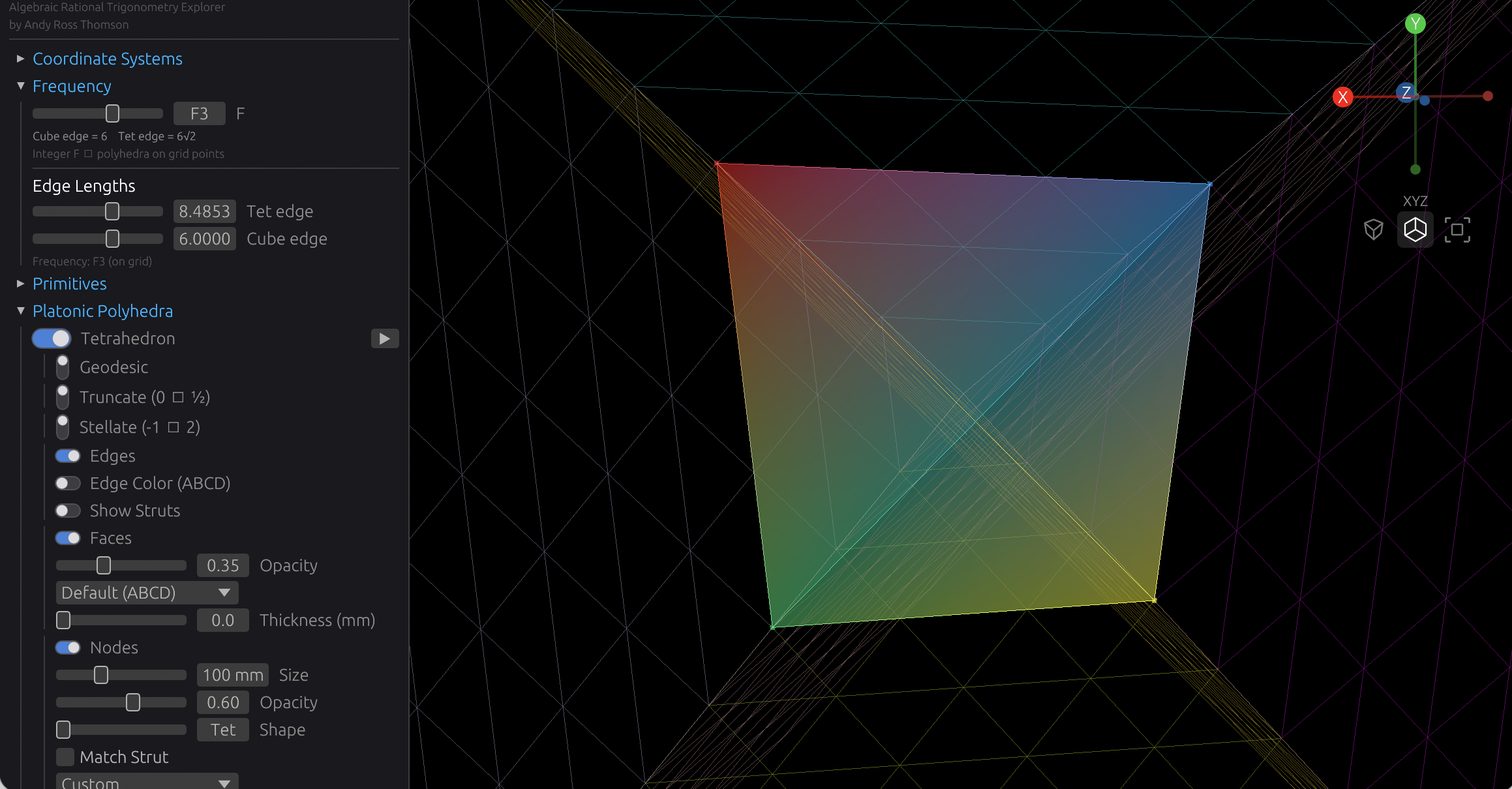
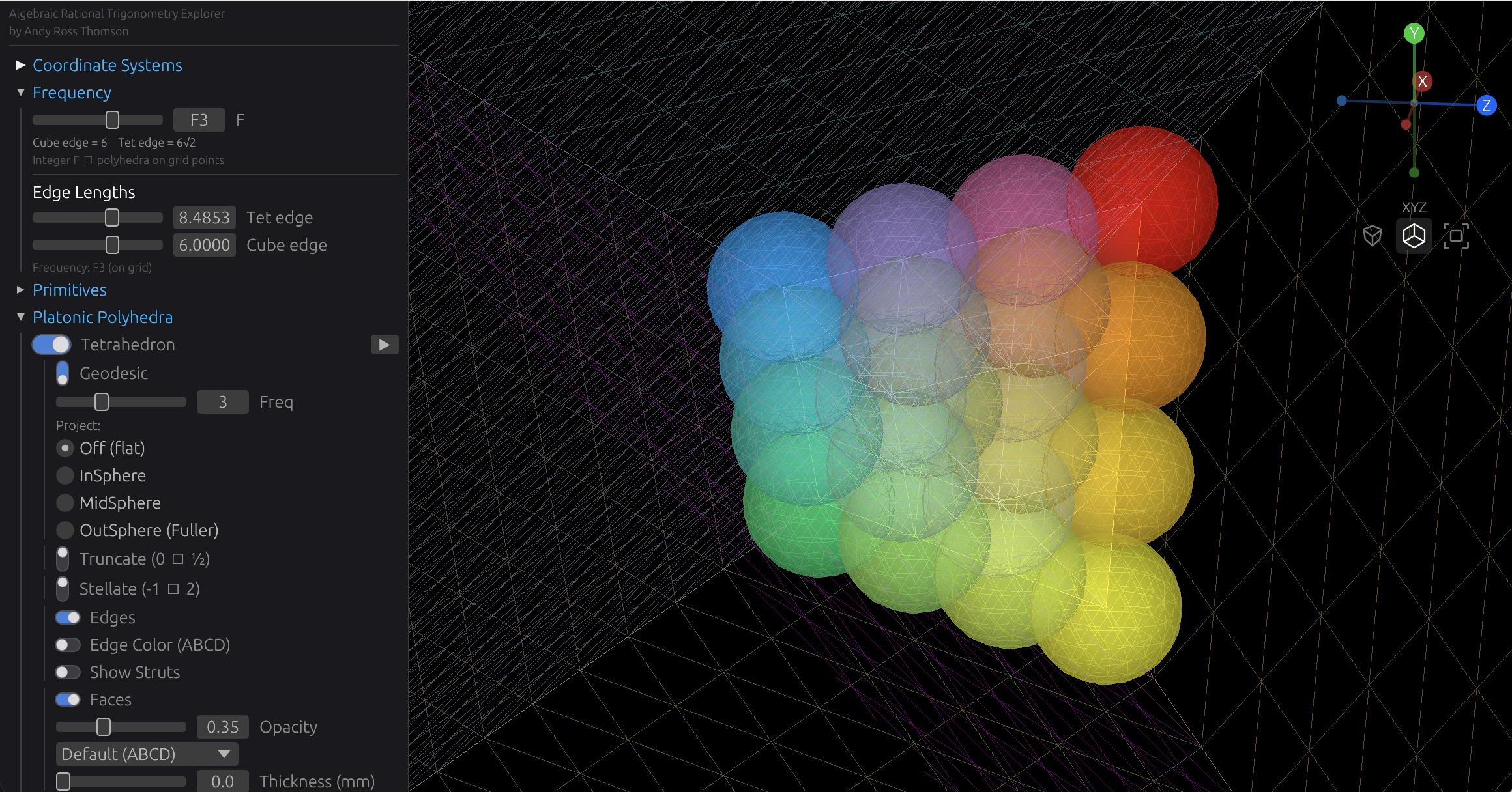
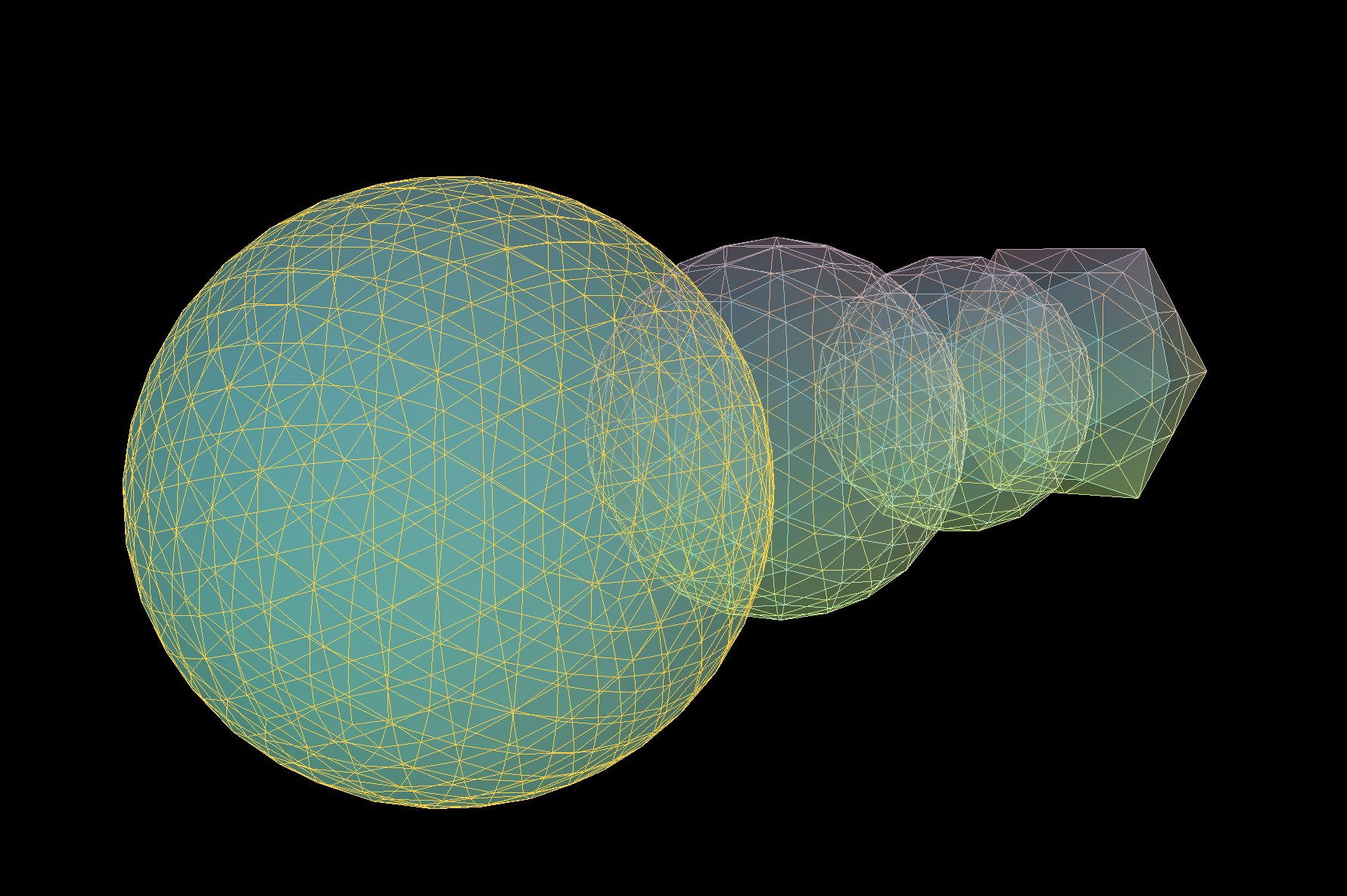
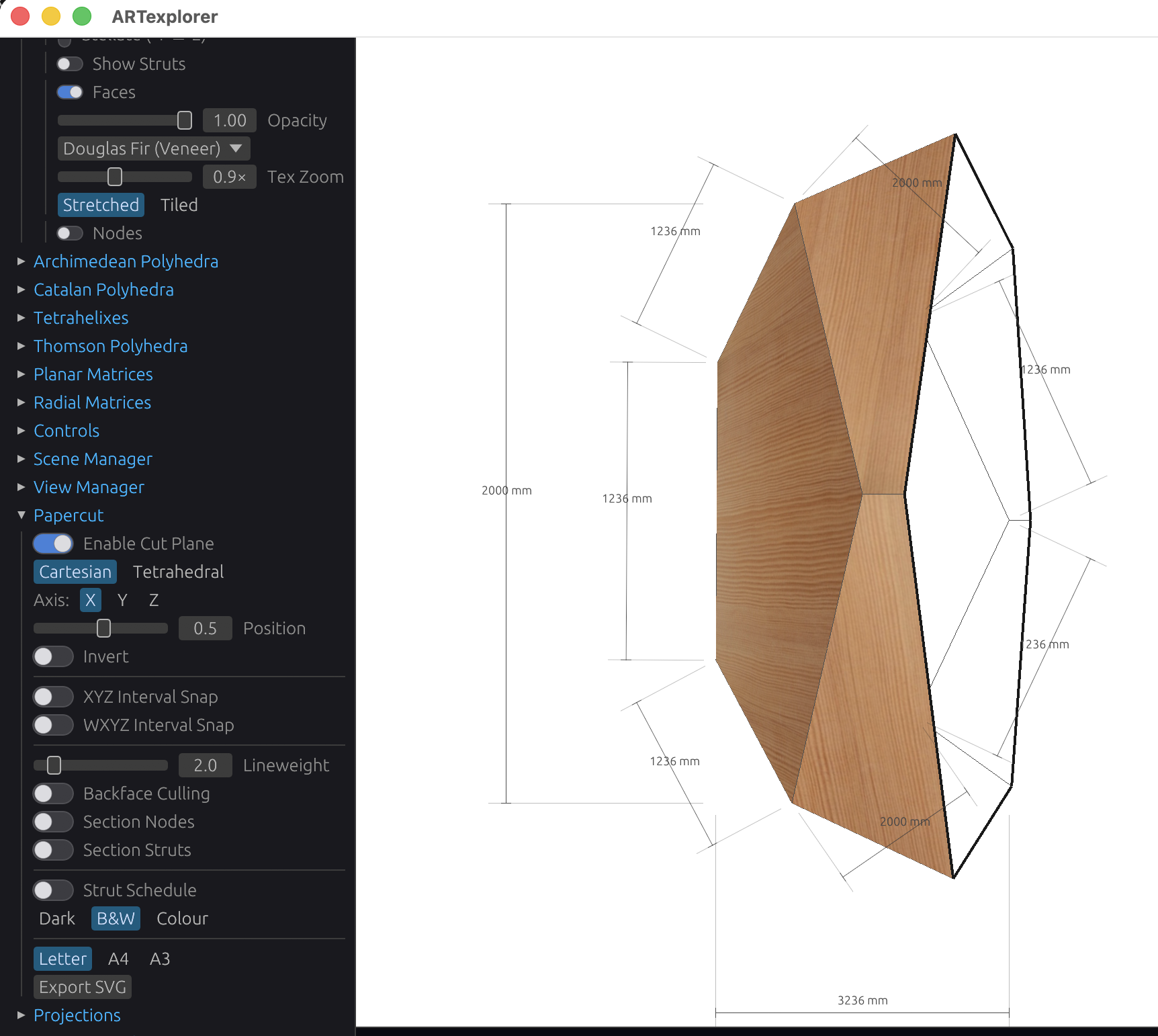
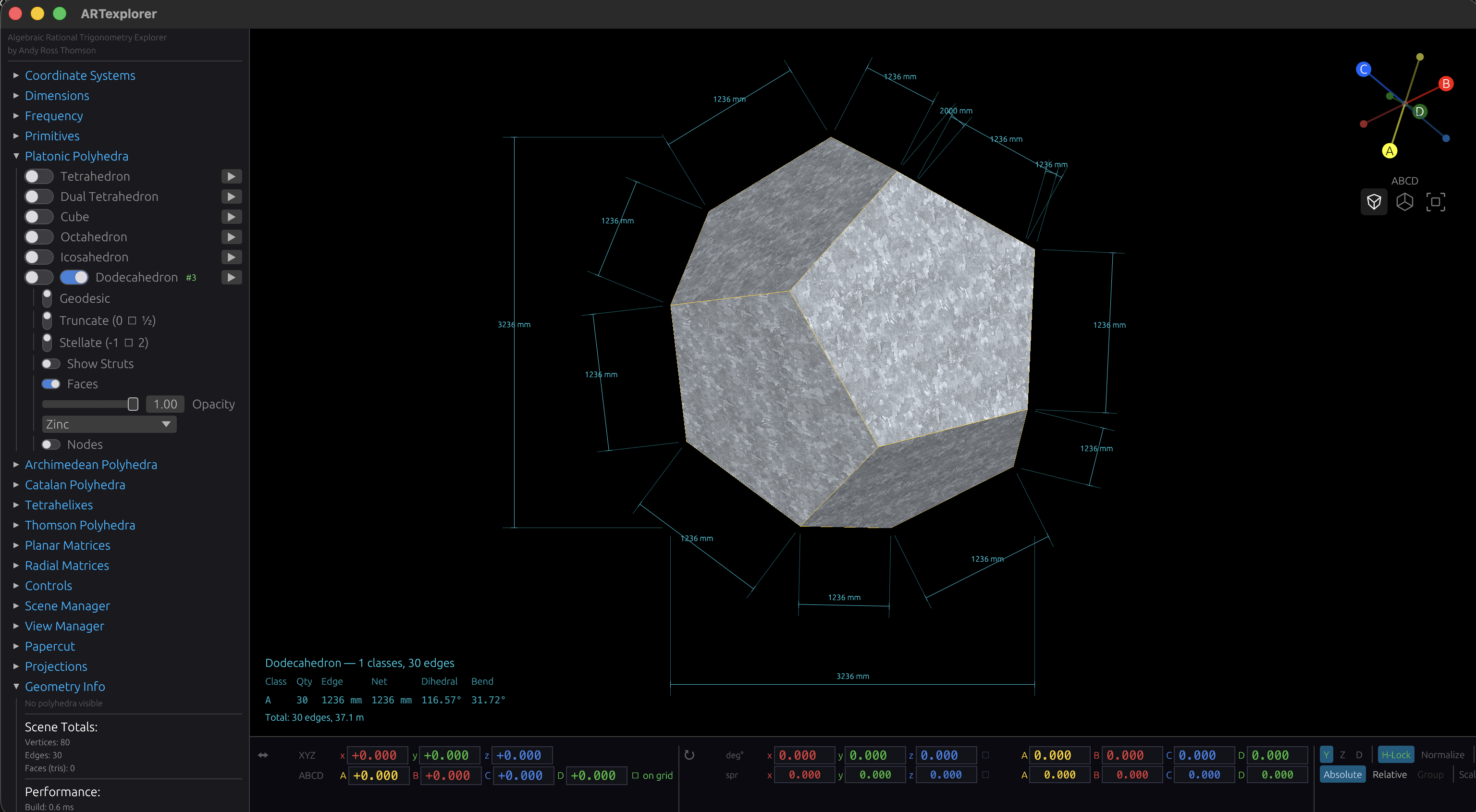
What we have now is an application of a consistent mathematical frame for Fuller’s concentric hierarchy of polyhedra, using the whole of Wildberger’s approach to Trigonometry, on a tetrahedral coordinate framework (Quadrays were originally developed by Kirby Urner and Tom Ace). This application is a functionally complete, new, Rust-based application for Apple Silicon machines rendered in Apple’s Metal, that contains a geometry and math engine based on the entire corpus of Bucky’s En Syn Geom or Synergetic/Energetic Geometry, thereby extending Fuller’s work into the next several decades. The results you can see here at https://ABCD.EARTH.
ABCD.EARTH’s rational math and geometry CAD kernel generates Ideas and Instances (Platonic terms) and renders them right to clip space all in pure ABCD coordinates. User interaction with the geometry is fed back to the math engine through an inverse of the same projection pipeline, bypassing XYZ coordinates entirely, from CPU to Clip-space (the user’s 2D screen) and back again. This proves that Descartes 350-yr old XYZ coordinate address mapping is not a pre-requisite for computational geometry.
My hope is that by developing this software, we can finally arrive at the buildings I have always dreamed of, lightweight, natural, resource efficient and inexpensive. They can feature self-balancing and load distributing structural frames in every instance. Decades of prefab design and construction, and work on large span vaulted structures and panelized assemblies have taught me enough to understand why and how domes of the past failed, and how to make them better in future. The software is the first proof. Buildings will test the soundness of the ideas as the second test.
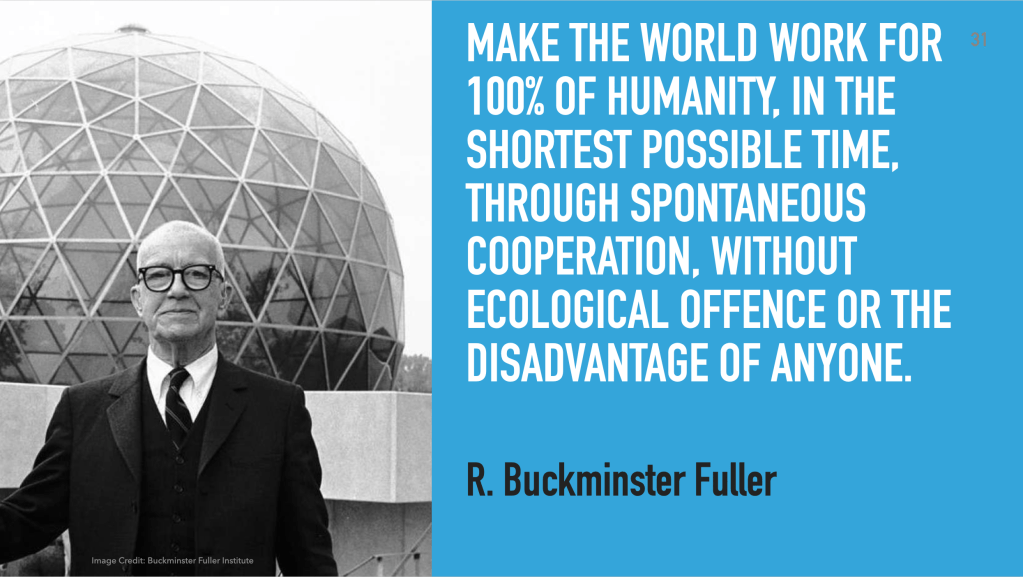
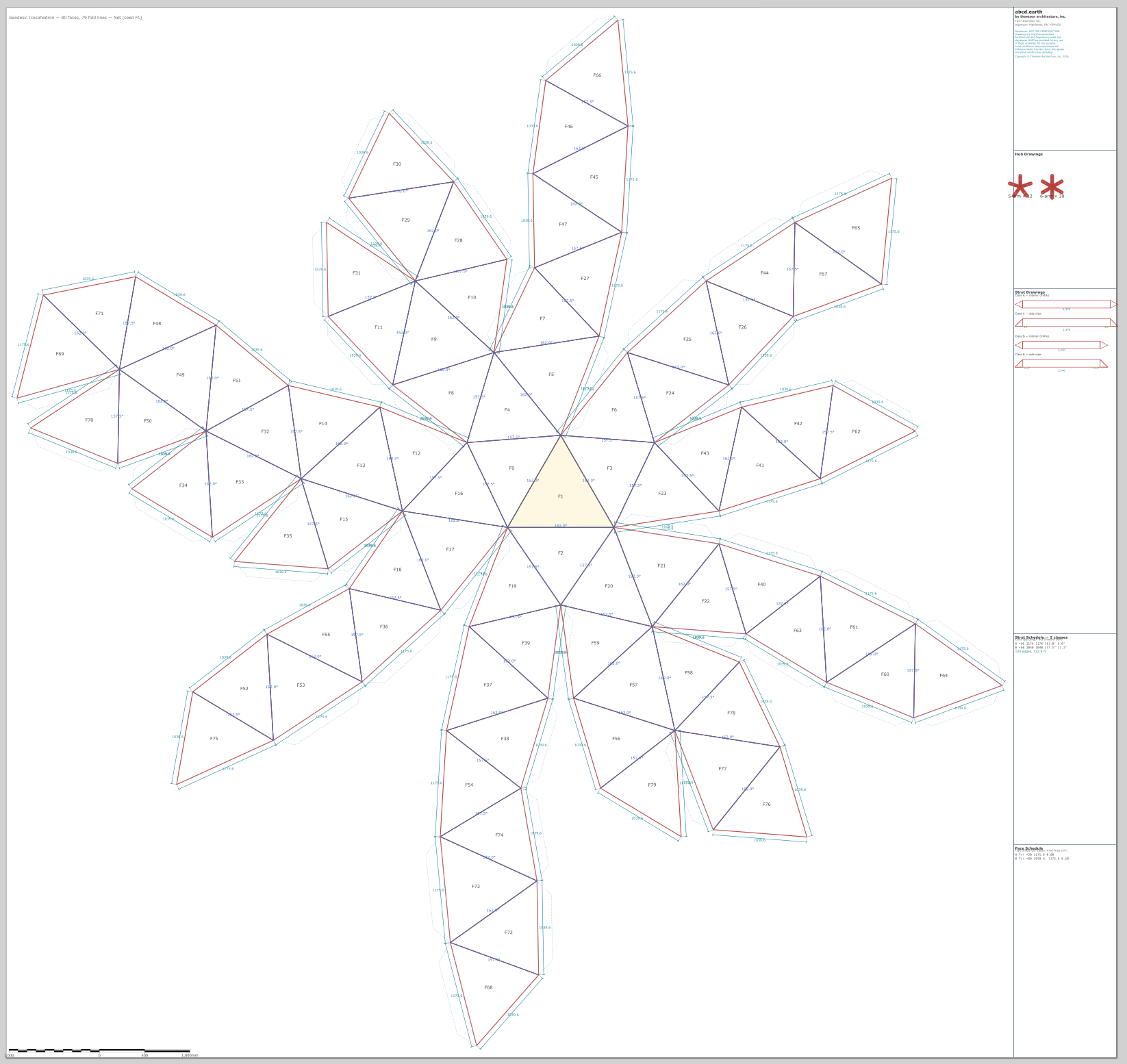
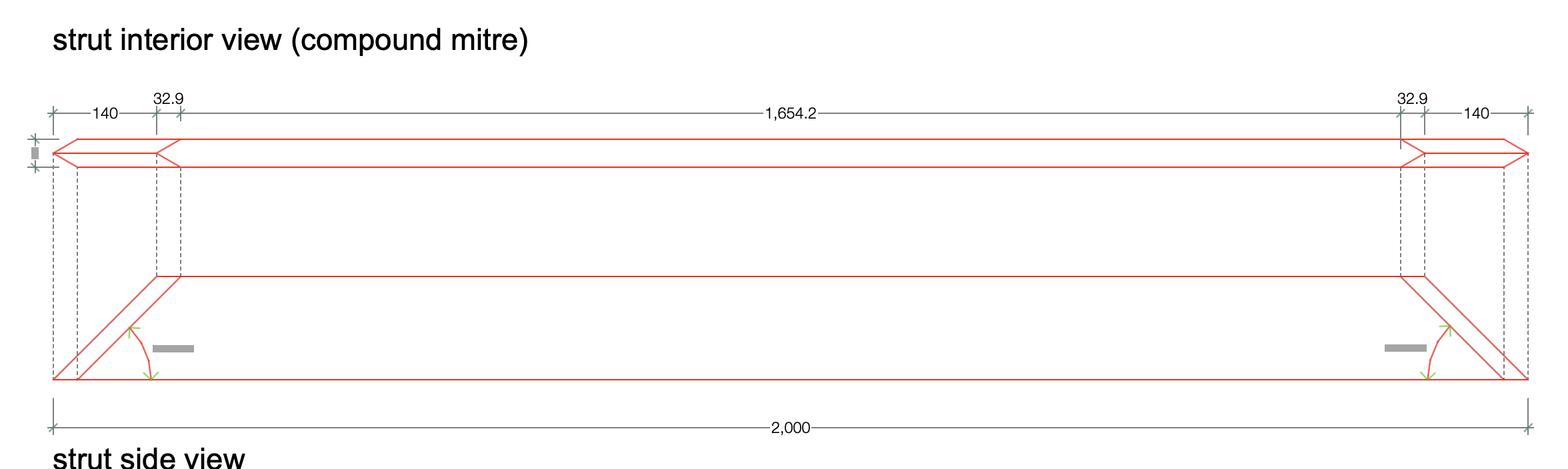
Panelized, modular, building-science-forward, prefabricated, Synergetic homes with fully-automated fabrication documentation, all designed and built on a rational trigonometry foundation. ABCD.EARTH was initially designed for Architecture, but with its rational precision, the tools can be used to design anything, from molecules to spacecraft. The promise of Bucky’s work, passed on to me by my mentor and Bucky’s associate Rudolf Doernach (RIP), was to make the world work for 100% of Humanity. I wish only to be of service to this aim, while honouring the work of so many others that have been and are still so generous with their time and ideas.
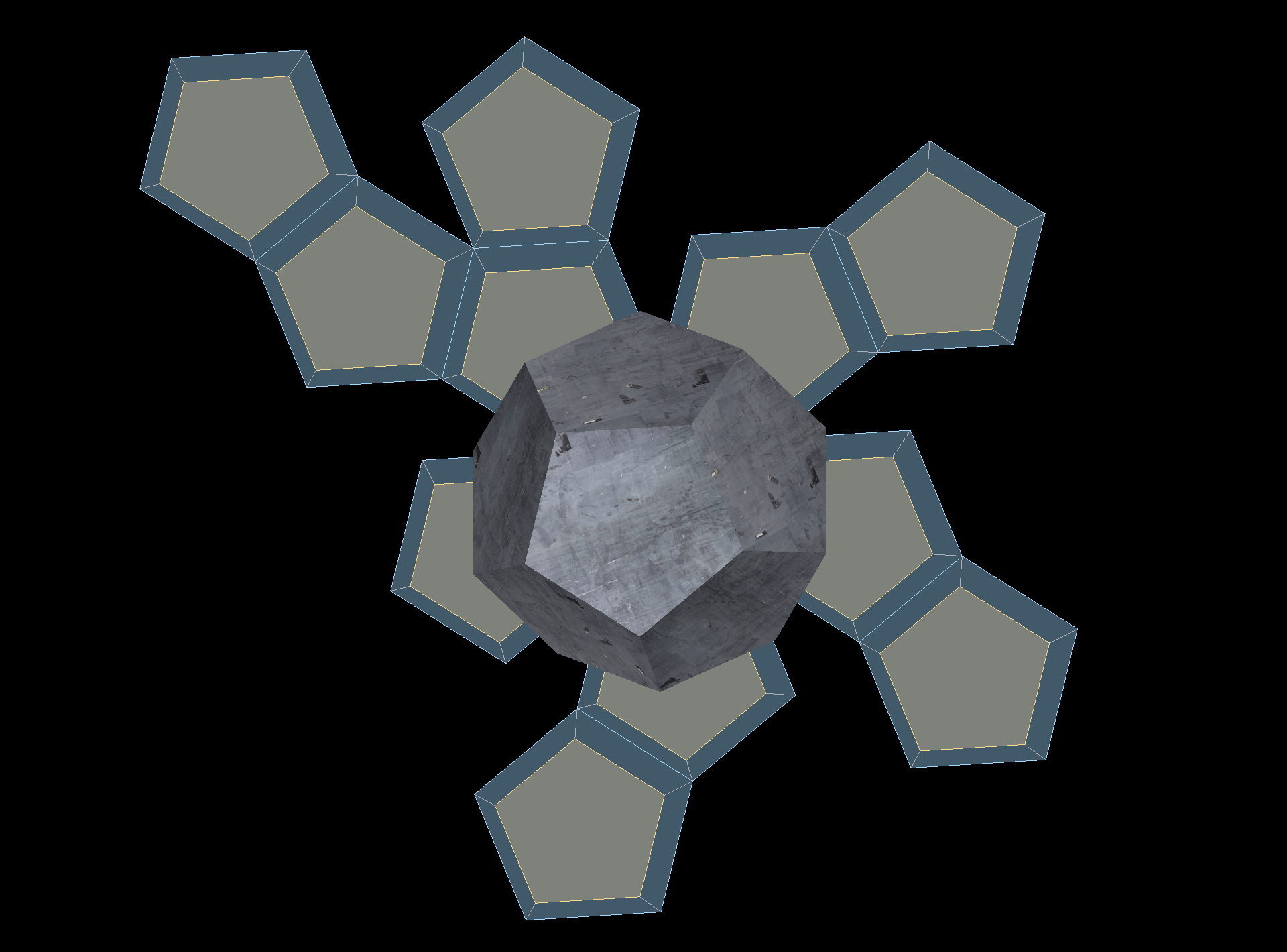
*Domes leak, for the same reasons car doors leak at the window gasket, only architects are not so good at detailing two planes of weather protection and drainage channels the way that automobile designers have been for decades. Domes leak, but cars rust. Rust and leaks are completely avoidable, stay tuned to discover how 🙂
DOI: 10.13140/RG.2.2.14110.91207 | © Andy Ross Thomson, M.Arch, OAA 2026.
Licensed under CC BY-NC-SA 4.0.
Index of whitepapers on Researchgate:
- The Synergetics Cookbook (Foundations)
- Spread-Quadray Rotors – A Rational, Tetrahedral-Native Algebra for 3D Rotation
- Extending the Janus Point from Temporal to Spatial Geometry via Tetrahedral (Quadray) Coordinates
- The 4D± Prime Projection Conjecture -v2.0 (Feb 2026) Rational-Spread Projections of Higher-Dimensional Polytopes as a Source of Non-Constructible Prime n-Gons
- Pending: Project Blue Fairy: Quadray Coordinates and Rational Trigonometry for Hardware-Efficient Neural Computation, and an AI-Accelerant-Geometric Substrate as Foundation for Verifiable Knowledge (structured data), Platonic Invariants, and Agentic Ethics

